
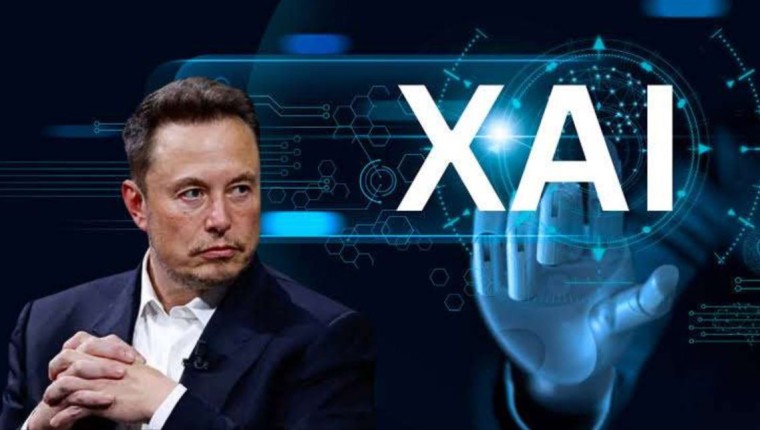
Elon Musk acknowledged that xAI’s Grok still trails the top models from Anthropic, while also highlighting rapid adoption of the Grok Bot agent platform and discussing China’s ability to overcome semiconductor manufacturing limits.
In recent weeks Musk has repeatedly conceded that Grok is not yet on par with leading systems from OpenAI and Anthropic. He told Chinese state media that the publicly available Grok 4.7 is a “reliable workhorse,” but admitted it lags behind Anthropic’s newly released Opus 5.5. In mid-September he said the not-yet-released Grok 4.8 — which he described as having 2.5 trillion parameters — should materially improve performance, though he did not expect it to match OpenAI’s Astra-class models or Anthropic’s Fable.
Musk attributed part of the gap to company age: xAI has been developing AI for about three years, he said, while Anthropic has been operating for roughly six. He expressed optimism that xAI will move closer to the cutting edge by next year.
At the same time, Musk stressed practical usefulness and fast growth for his platform. He compared Grok Bot to a personal digital assistant and said the service is expanding at about 100% per month, calling out the agent platform’s rapid uptake.
Musk also described an opportunity where SpaceX and Tesla could give Grok an edge. He suggested Anthropic has built especially strong AI for software engineering, whereas “real-world engineering” AI that excels at physical engineering tasks does not yet exist. According to Musk, data and engineering experience from SpaceX and Tesla should help Grok occupy that niche.
The interview also covered China’s semiconductor prospects. Musk said he expects China can solve its lithography and chip manufacturing problems in roughly two to three years, a faster timeline than some anticipate. Industry voices are more cautious: Frank Romund, head of Zeiss’s semiconductor division, has previously suggested China could lag the West by about 15 years in advanced EUV equipment.