

Pirate Romance on Cliffsides: A Review of the Urban Planning Strategy of Corsair Cove
City-building games have a habit of recycling eras—ancient empires, frozen colonies, domed futures. Pirates, oddly, have mostly been sidelined: when the sea gets attention it usually means ship combat or strategy-level raiding, not the granular task of placing a tannery next to a cliffside tavern. Corsair Cove (see Corsair Cove) tries to fix that blind spot, mashing together base-building, survival, logistics, and an economy that squeaks and groans as it grows on razor-thin land carved from rock and ocean spray.
Architecture on the Edge of the Abyss
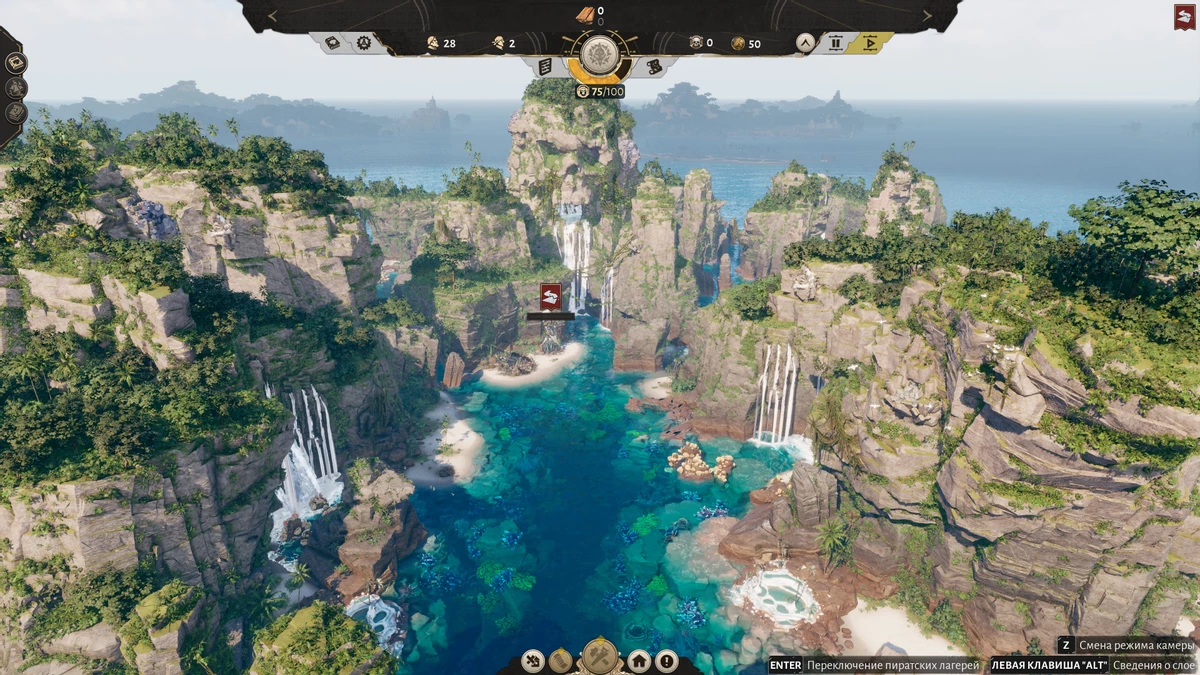
This game forces a change in mindset. Flat grids and sprawling fields? Not here. Buildable land is a scarce commodity; cliffs and crevices eat most of the map. You learn to stack rather than sprawl: houses, taverns, shipyards tucked into ledges and terraces, linked by suspension bridges, lifts, zip lines, and elevators. The layout reads vertically; routes go up and down more than they run across.
Logistics stops being background noise and turns into the puzzle at the heart of play. Misplace a distribution hub or cut corners on ascent infrastructure and supply chains choke—wood piles rot below, workshops stand idle, cannons sit uncast. Watching barrels of rum and sacks of grain slide along cables over the void is oddly satisfying, but also a constant reminder that a single misplaced elevator can cascade into disaster.
You’ll chase deposits of iron, copper, timber, and textile fiber across jagged terrain, and every new building increases the combinatorial headache of moving goods and people. Bridges and mechanical lifts are not mere decoration; they’re the arteries that keep the settlement breathing. Ignore them at your peril.
The Economy of Freedom
A haven of cutthroats needs more than farms. Word spreads, and new arrivals expect comforts: food, clothes, curious baubles. The game lists more than fifty consumer items, from hardtack and turtle stew to jewelry and prosthetics for the unlucky. Meeting those tastes forces expansion into remote hollows and onto exposed headlands where resources are thin.
When local supply runs dry, you go to sea. Outfit raiding squadrons, chase trade convoys, or explore unknown isles for cargo—grain, coin, whale oil, wine, etc. Those forays are risky; they invite imperial eyes. The Crown, when provoked, sends punitive squadrons that will test whatever coastal guns and cliff batteries you’ve managed to wedge into place.
Combat at sea uses tactical turn-based mechanics. Ship stats, crew skill, captain decisions, and positioning determine outcomes. Along the way you encounter events—smugglers, hidden temples, rebel caches of gunpowder, or enormous sea beasts that make a mess of carefully planned routes. Harbor defenses are fiddly and fun to tune: a gun with poor arcs is as useless as none at all, i.e., siting matters.
Atmosphere, Visuals, and Technical Execution
There’s character here. The island feels lived-in: tavern laughter, armory smoke, the slap of waves, and the constant creak of lifts fill the place in audible layers. Visual fidelity occasionally flirts with charm over realism—textures and scale choices lean toward readable clarity so you can actually manage the tangle of multi-level buildings.
The UI aims to give you important info without smothering you. Food stocks, crew morale, structural durability—visible when you need them.
Localization is decent; the game ships in multiple languages, including Russian, so following production chains isn’t an exercise in guesswork.
Performance is surprisingly stable even when hundreds of sailors and moving trolleys populate tiny vertical neighborhoods.
Conclusion
Corsair Cove isn’t a polite little sim; it’s prone to throbbing logistical headaches, moments of genius layout, and the occasional absurd comedy when a rope line stops working at the worst possible time. If you enjoy being forced to puzzle in three dimensions, then this one scratches an itch few city-builders target. It’s not flawless, but it makes cliffside urban planning feel like its own peculiar pleasure—gritty, a bit frustrating, and often rewarding.