

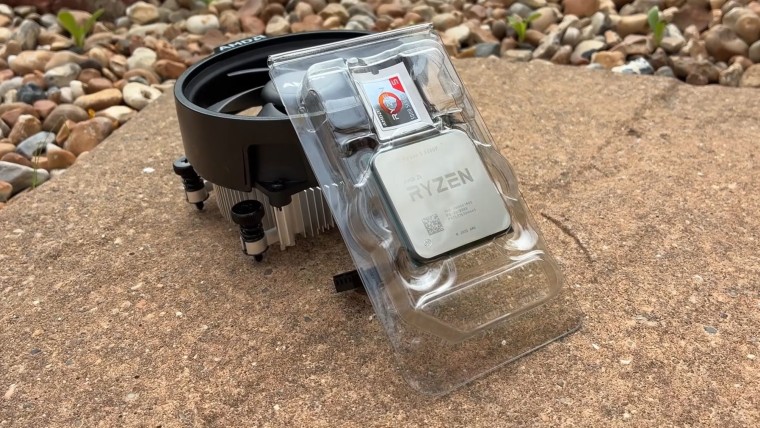
AMD Ryzen 5 5500F up to 15% faster than Ryzen 5 5500 in games, but 16 MB L3 cache limits its potential
AMD has added the Ryzen 5 5500F to the Ryzen 5000 lineup — a Zen 3 part built on the Vermeer die — and early gaming benchmarks show modest gains over the Ryzen 5 5500, but also reveal a key limitation.
The new 5500F benefits from a higher Boost clock (up to 4.4 GHz) and support for PCIe 4.0, while the Ryzen 5 5500 (a Cezanne part) is restricted to PCIe 3.0. AMD’s announced pricing lists the Ryzen 5 7500 at $189 and the Ryzen 5 5500F at $99.
A notable drawback of the 5500F is its 16 MB of L3 cache — roughly half the L3 capacity found on other Vermeer chips such as the Ryzen 5 5600 — and RandomGamingHD’s first set of gaming tests suggests that this smaller cache constrains the processor’s upside.
Testing used a Radeon RX 9060 XT 16 GB and compared the Ryzen 5 5500F directly against the Ryzen 5 5500. Results varied by title: in CS2, GTA V Enhanced, and Cyberpunk 2077 the 5500F ran about 7% faster and produced improved 1% low frame rates; Red Dead Redemption 2 and Crimson Desert showed a smaller 2–3% edge; Forza Horizon 6 produced nearly identical frame rates on both CPUs; and Battlefield 6 delivered the largest gap, with the 5500F achieving almost 15% more FPS.
Those figures indicate that the higher Boost speed and PCIe 4.0 support give the 5500F a tangible advantage over the 5500, but overall its gaming performance remains much closer to the Ryzen 5 5500 than to the Ryzen 5 5600. According to the author of the tests, the 16 MB L3 cache is the main factor limiting the new chip’s gaming potential.