

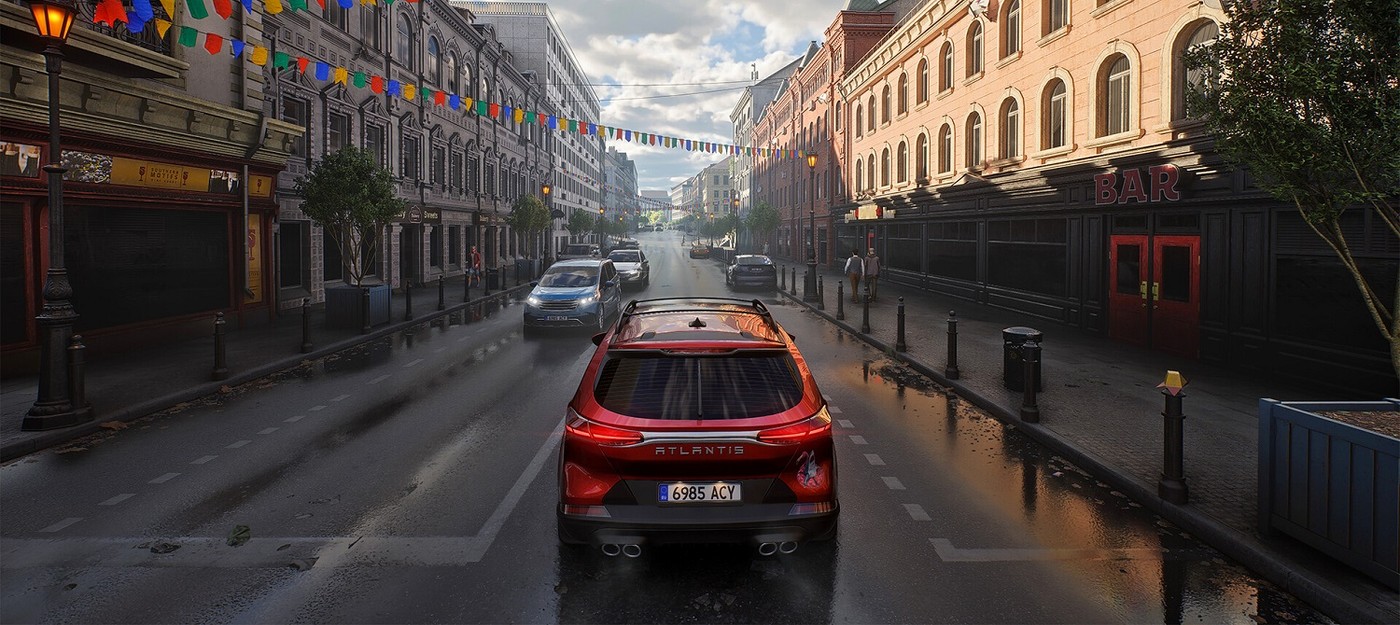
Saber Interactive's Creative Director Tim Willits — who co-owned id Software from 1995 to 2019 — tried to soothe some of the friction around generative AI tied to the studio’s new project. At Gamescom 2026, in a chat with journalists, he explained where the tech shows up in Rideshare Simulator and why, in his view, many players are misreading the situation.
As many know, we are experimenting with AI in future games. It is not here yet, but we announced Rideshare Simulator, and I want to clarify something because there are some misconceptions.
This conversation did not come out of nowhere. Earlier this month Saber hit a rough patch: the studio was accused of waiting too long to note AI use on its Steam page, and a former writer alleged they’d been pushed off the project to make room for neural nets.
The same writer was later the target of a sharp public rebuke from Saber head Matthew Karch; he apologized afterward. Willits says the main campaign and all side quests are written by people (hum.), while AI is confined to an optional mode called "Free Ride."
We are going to use AI for passengers to offer new stories. This is only possible with AI – it’s an experiment. We at Saber want to understand how to use this technology, so we’re doing it on a small scale to learn. Like everyone else, we’re just trying to figure it out. But there is no generative AI in our major titles. Neither in Hellraiser, nor in Turok, nor in Stuntman.
That “only possible” line is worth pausing on. Yes, generative models can churn out near-infinite variations of passenger banter. Then again, you could craft a sizeable "Free Ride" by hand — finite, sure, but perfectly serviceable for a game not designed to be an endless grind. Content would eventually taper off; players might notice. Still, Willits seems keen to poke at the tech in a limited way and see what happens.
We want to experiment, and I believe there will be a company, I don’t know which one, that will create a game using AI in such an amazing way that everyone will say: this is it, this is what we need to do.
He even cracked a joke about “someone needs to come up with Half-Life 2 in the AI world” — a flashy, show-stopping example that would get imitators sprinting. Willits also mused about how id Software might have behaved back in its heyday: bluntly, he thinks they would’ve embraced generative AI if it had existed then.
Of course! Look at what id Software did. In 1999, when Quake III came out, it required a video card, and we received so much criticism. People said we would ruin the industry, that nobody would spend 100 dollars on a video card, and that it was the dumbest idea ever. I know for sure that if such technology had been available then, John Carmack would be making something like Skynet.
Still, he circles back to a practical point: let the games be the test. Try Rideshare Simulator when it’s out, he suggests — decide for yourself whether the experiment lands.
Games speak for themselves, even in our experiment with Rideshare Simulator I advise people to try it themselves when it comes out. Maybe they will say: oh, this is cool, I like it. And if they don’t like it? Well, that’s fine. But games speak for themselves.