

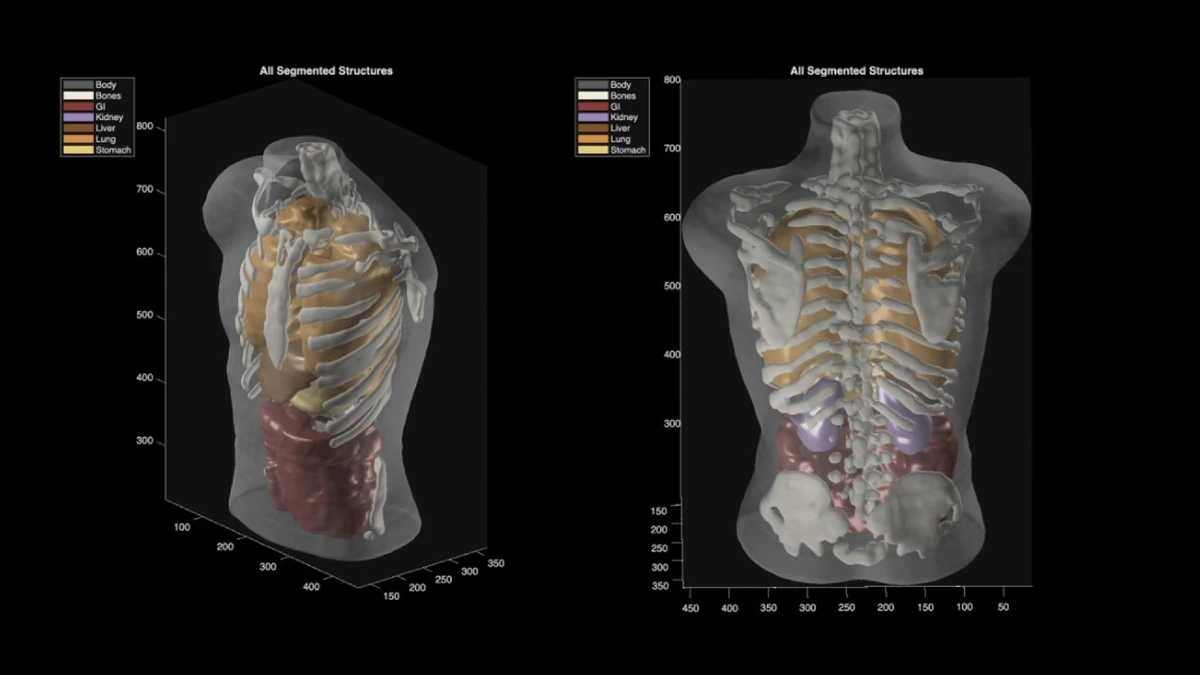
Midjourney — the startup more often associated with generative imagery — has a new device: the Midjourney Scanner, an ultrasound machine that claims to map the body in 3D in about 1 min. Its approach is odd enough to make you pause: you lie in a shallow pool, a ring studded with roughly 500,000 microscopic acoustic elements pings the body, and the system uses ultrasound echolocation (think dolphin-like) to assemble a volumetric model with reported precision down to fractions of a mm.
The experience is pitched as something closer to a spa visit than a cold medical exam; yes, saunas and light exercise are actually part of the rollout. By the end of 2027 the first Midjourney Spa opens in SF, and the plan is to start expanding across the US in 2028. CEO David Holz has set an ambitious target — 50,000 scanners worldwide within six years — and the company puts numbers on the upside: a claimed 30% cut in mortality and a halving of global healthcare costs. Those figures read optimistic; plausible, maybe, but unproven at scale.
There’s a clear question mark left dangling: can this tech really challenge MRI for complex diagnostics? Short scans and non-ionizing sound waves are attractive, but hard clinical cases, tissue contrasts, and established diagnostic workflows are different beasts. We’ll have to wait for peer-reviewed results and real-world comparisons before either cheering or worrying.