

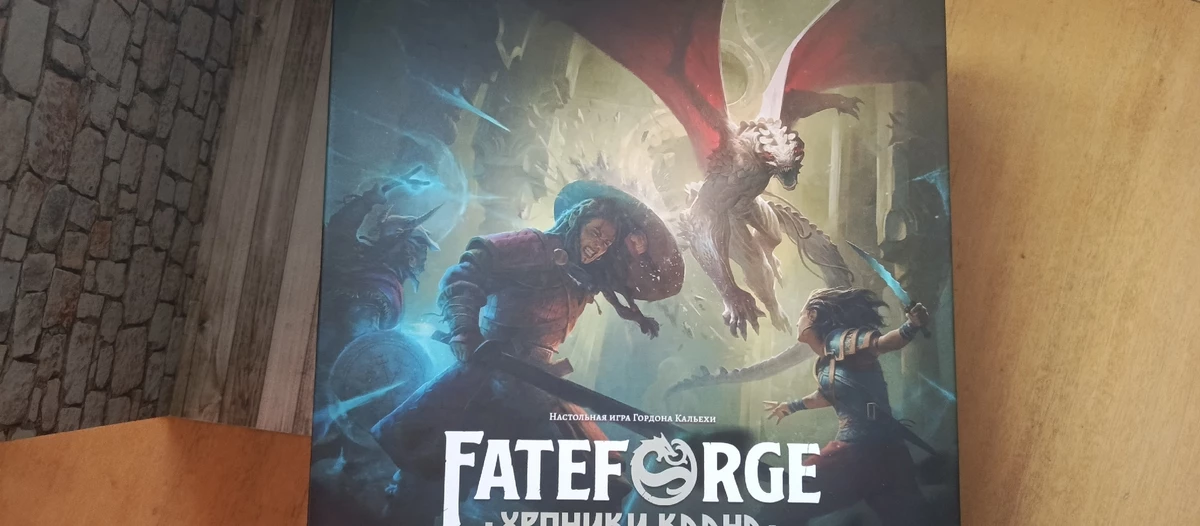
Review of the Cooperative Role-Playing Board Game "Fateforge: Chronicles of Kaan": The Best Board Game for Those Tired of Waiting for Friends and Reading Tons of Lore
Every few months I get pulled back into sprawling board adventures — think "Gloomhaven" — and I always notice the same thing: there’s a whiff of RPG rules, but mostly we come for the fights and the sweet rush of leveling up. I do enjoy a good story, truly, yet at the table I’m selfish: give me movement, tactics, and immediate consequences. After a long day, two hours is precious; I do not want to wade through a novel’s worth of intro material before the dice hit the table.
Campaign-style games, too, have become a scheduling nightmare. Convincing a group to meet twelve-plus times for one box? Rare. Even arranging a second session can feel like negotiating a peace treaty. Who among us hasn’t shelved a game because "there’s no one to play with"? Solo campaigns — well-designed ones — feel like the sensible compromise. That’s where the board RPG "Fateforge: Chronicles of Kaan", localized by Hobby World, enters the scene. Before impressions, a quick peek inside the box.
What’s in the Box?
- 39 double-sided battle map tiles
- 6 plastic figurines
- A box with 497 cards
- A letter
- 3 terrain maps
- A cartographic legend
- 4 player screens
- 4 player aids
- 9 card dividers
- 5 hero boards
- 3 boss tokens
- A sealed envelope with 3 boss boards
- 39 special dice
- 2 component containers
- 20 gem tokens
- 96 double-sided enemy tokens
- Game setup sheet
- 10 component storage boxes
- More than 160 additional tokens and chips
- Game rules
What the Game is About and How to Play
Short warning up front: you will need a tablet or phone. The app runs the show — narrative beats, enemy placement, which cards to draw, hero statuses. Everything starts there: a bit of lore, then alternating scenes and skirmishes across three acts. In practice the game is a cooperative campaign for a small group, with the mobile assistant taking care of the tedious bookkeeping. In my solo run I controlled two heroes (out of five): a local aristocrat and a healer-shaman.
The digital helper does its job neatly. Sound design adds atmosphere — clanking steel, creature growls, unobtrusive music — but there’s no voice acting, which I appreciated; text pops up, you read it, and you get back to the table without theatre-style pauses. Each character uses a two-layer board for health and energy tokens. Progression is mostly battle → short downtime → more battles. Between fights you can heal, train, or buy gear, and resting is handled in an unusual way: you spend a limited pool of time points on available actions. Go to the smithy for a weapon? Or chase a side quest that might net allies or secret locations? Your choices steer what appears next, not just cosmetically but mechanically. Then another story fragment, then the app tells you how to set up the next encounter: tiles, gems, chests, traps, enemy cards and tokens. Every skirmish comes with a turn limit and specific objectives to meet within it.
The base box includes five different heroes. Each has a distinct dice set, unique skills, and a leveling track; health and energy vary, as do equipment limitations. Roles feel sharp: the Mercenary stacks defense dice, the Forest Guard can reroll under certain conditions, etc. Combat is the real draw — it punishes sloppy play and lets smart sequencing shine. The app seeds conditions (traps, loot chests) and deploys a mix of enemy types, from grunts to dangerous leaders. Difficulty bites early: in opening missions my heroes were pushed to the brink several times, and a later boss died with the party riding on a single health token.
Individual rounds mix resource decision-making and tactical action. You can spend resources to fix bad rolls or perform maneuvers at the cost of energy. A duplicates rule lets you convert matching dice faces into the symbol you need — a frequent lifesaver. Then comes movement, attacks (melee or ranged), and skill activations. Rules are intuitive: no angle-of-view geometry to agonize over, and most mooks fall to a precise hit, which is satisfying until a tougher foe exposes a weak plan. Enemies activate in waves between your turns, following simple algorithms that shove them toward the nearest threat; you’ll constantly reassess risk and reposition. Enemy behavior doesn’t take long to resolve — usually a couple of minutes — which keeps the game brisk. Dice remain the main instrument: they dictate movement and combat options, and in group play there’s a neat hidden-planning element behind screens where players hint at intentions without revealing exact values. Solo, that same structure turns into a compact tactical puzzle.
Conclusion
By the time you’ve read this, you could already have played a battle in "Fateforge: Chronicles of Kaan". The combat is brisk and rewarding — it scratches the itch for tactical crunch after a long day — but it isn’t flawless: the screen dependency and occasional punishing swings can frustrate, esp. if you dislike app-driven pacing. If you want compact, tactical fights and a campaign you can reasonably solo, this one deserves a look; if your ideal evening is a screenless, all-play table session, it might not.