

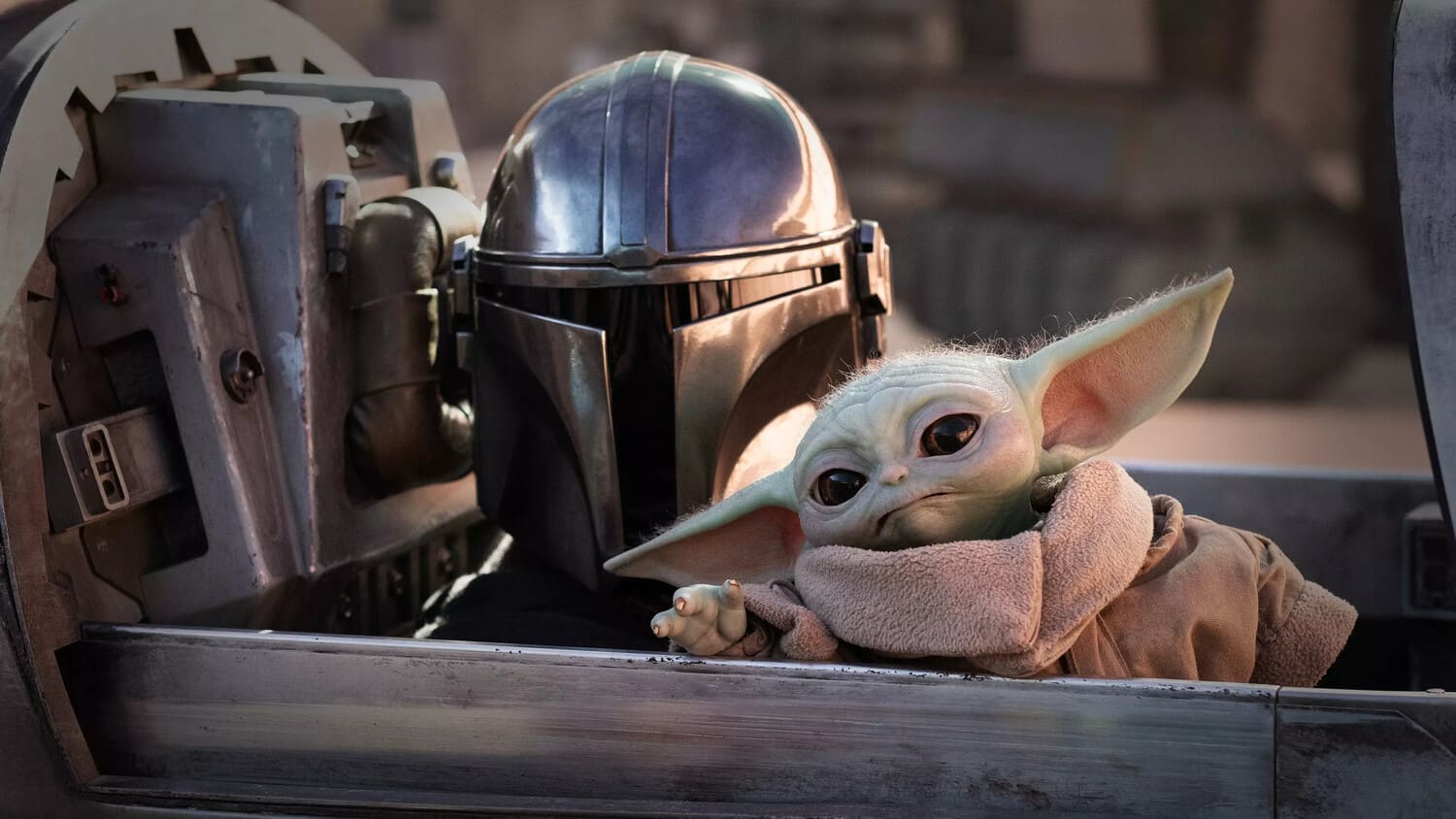
"The Mandalorian and Grogu": a big movie about a little green creature who doesn’t quite understand why it came to the cinema
Review of the film "The Mandalorian and Grogu" / Lucasfilm Ltd.
11 years — a long stretch, if you measure in fandom mood swings. In that time Disney has rolled out and then somewhat buried a trilogy, launched a bunch of series (some hits, some misses), and sent the "Star Wars" fanbase through a predictable loop: outrage, reconciliation, repeat. Now we get a feature-length “The Mandalorian and Grogu”, the first theatrical thing from that galaxy since 2019. On paper: an occasion. In practice, about 30 minutes into the screening you start wondering whether you’re watching a movie at all or just a roomy TV episode — and the film keeps nudging you toward that doubt.
The Mandalorian and Grogu (2026)
Original title: The Mandalorian & Grogu
Country: USA
Director: Jon Favreau
Cast: Pedro Pascal, Sigourney Weaver, Jeremy Allen White, Stephen Blum, Martin Scorsese
Genre: sci-fi, action, adventure
Premiere: May 20, 2026 (worldwide)
Rating: 12+
Score: Kinopoisk — 7.1 / IMDb — 7.0 / Letterboxd — 3.1
Plot: quest accepted, quest completed
The studio shelled out roughly $165–166.4 million to make this; for modern "Star Wars" that’s on the frugal side (e.g., the Han Solo film topped $275M). Source: Lucasfilm Ltd.
Din Djarin (Pedro Pascal) keeps doing his Republic errands: rounding up stray Imperials and turning them over. This time his path crosses a Hutt clan — Jabba’s less flattering kin want their nephew Rotta (Jeremy Allen White) back from a gladiator pit, and they’ll trade intel on an Imperial of interest. Grogu, of course, is never far from the frame: still irresistibly cute, increasingly autonomous, and — when the plot needs a nudge — unexpectedly handy.
Guillermo del Toro helped in the work on the film “The Mandalorian and Grogu”
TV on the big screen
Lucasfilm brought in Phil Tippett — the old-school effects craftsman tied to the original trilogy — to stage some stop-motion-inflected battle beats, including the odd physics of a fighting Hutt. Source: Lucasfilm Ltd.
Here’s the blunt bit: the picture behaves like a sequence of TV episodes stitched end-to-end. Plot mechanics are procedural and predictable — go to A, pick up mission, detour at B, hit obstacle, limp to C — and the drama inside each chunk doesn’t escalate into anything that feels cinematic. The stakes rarely feel lifted beyond what a season episode would carry. So why blow this up for theaters? The practical answer sits in the same place most studio answers do: merch, brand leverage, and the safe math of a known IP. You can feel the calculation; it’s not subtle.
What works — and works well
To get Grogu to blink, tilt his head, and sell longing looks, the puppet required 4–5 puppeteers working in sync; CGI mostly exists to erase the gray-suited humans standing in for those performers. Source: Lucasfilm Ltd.
Still, the film isn’t a total slog. Pascal — even masked — anchors scenes with small physical choices and an amused, weary tone; he sells Din as someone you’d trust to cover your six, and that matters (esp. in quieter beats). Grogu is the real scene-stealer: the animatronic is more articulate than before, with micro-expressions and ear-twitches that telegraph a lot without words. The filmmakers lean into that; sometimes it feels manipulative, sometimes it lands pure. Either way, those moments are the movie’s clearest currency.