

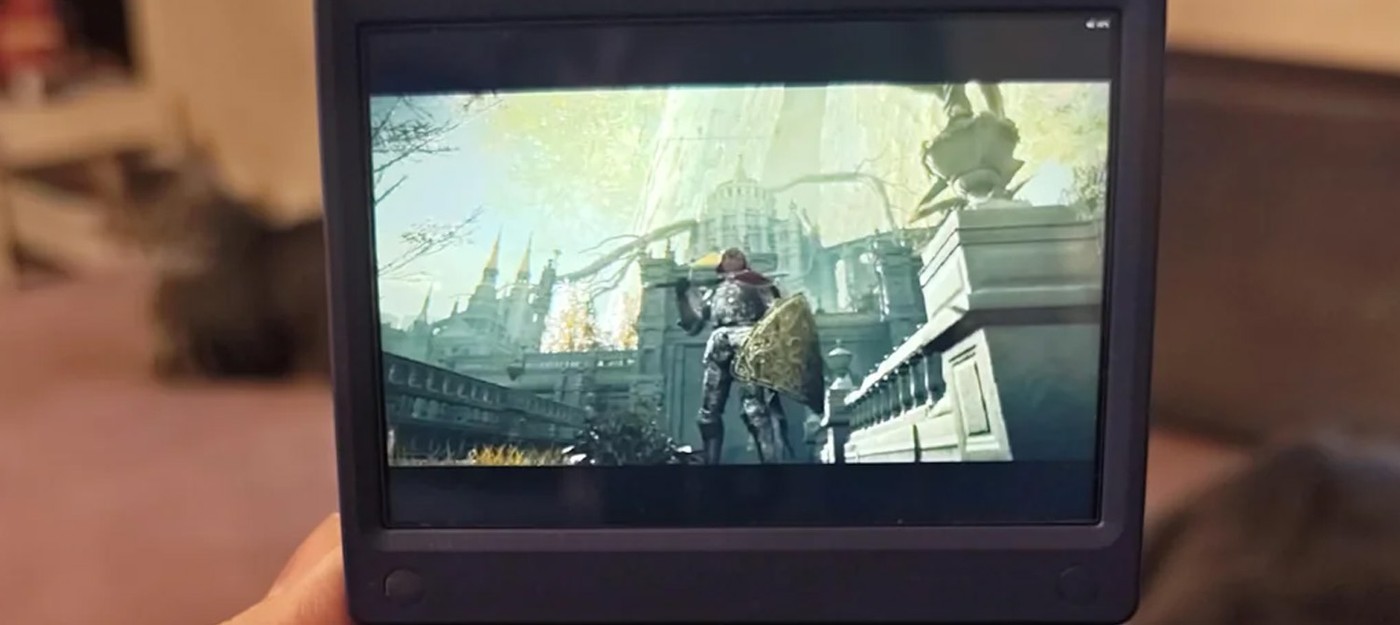
The phrase "play the way it was intended" usually conjures 4K, HDR and a massive monitor. For one player, it meant the opposite: a pocket clamshell the size of a Game Boy Advance SP streaming a PC copy of Elden Ring.
A Reddit user documented playing that way by loading an old Elden Ring save on a desktop PC and using Moonlight to stream the game to a 3.4-inch handheld with a 480p screen.
The handheld in question is an Anbernic-style clone rather than an actual Nintendo clamshell, but the visual gag—"GBA running a Soulslike"—holds up. Technically the setup is straightforward: Moonlight, an open-source streaming client created as a replacement for NVIDIA GameStream, receives a video feed rendered by the desktop. After GameStream’s shutdown in 2023, the Moonlight plus Sunshine pairing became a common home-streaming solution for phones, smart TVs and DIY portables. The handheld functions as a thin client with a video decoder and a gamepad while the PC does the heavy lifting.
Players think the Two Fingers from Elden Ring reference the legendary way of finger placement on a gamepad for Soulslike games
Performance in this arrangement separates into two parts: frame rate and latency. The PC determines frames per second, while network hardware and the codec determine input and display latency. As several commenters pointed out, a solid home network can make latency effectively unnoticeable for single-player titles, but inexpensive clamshells often include older Wi‑Fi chips that add lag. Timing-intensive mechanics like parrying in Elden Ring require only a few frames, so an extra twenty milliseconds can turn an otherwise winnable duel—against a boss like Radahn—into a frustrating exercise in prediction.
Gamers recommend the best games for a depressive mood – topping the list are Elden Ring and Shadow of the Colossus
The Reddit thread quickly turned into a tongue-in-cheek contest over who was the most hardcore: a color screen or a backlight was called cheating, and using buttons instead of touch or not using weapons drew mock shame. The nostalgic conversation around the experiment proved as lively as the setup itself. Commenters recalled the 2003 Game Boy Advance SP—Nintendo’s first portable with a backlit screen and a built-in lithium‑ion battery—contrasting it with the pre‑SP era when players angled the original GBA toward a window or attached a lamp to the expansion port and burned through AA cells.